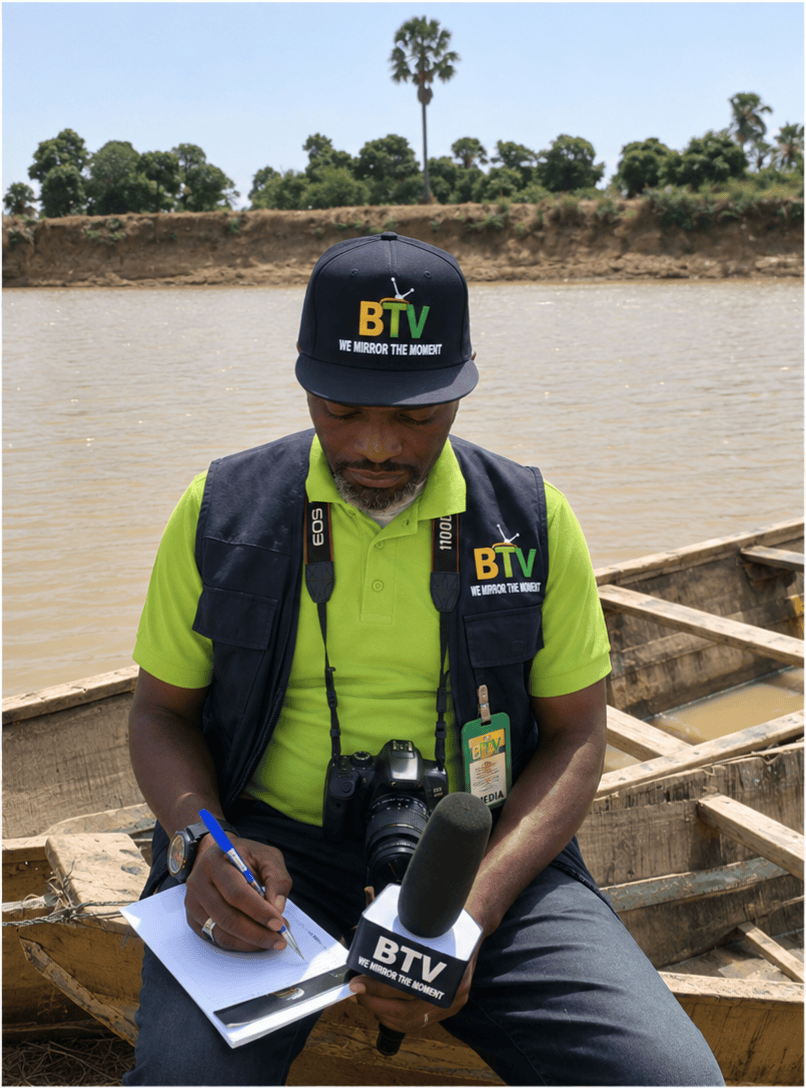
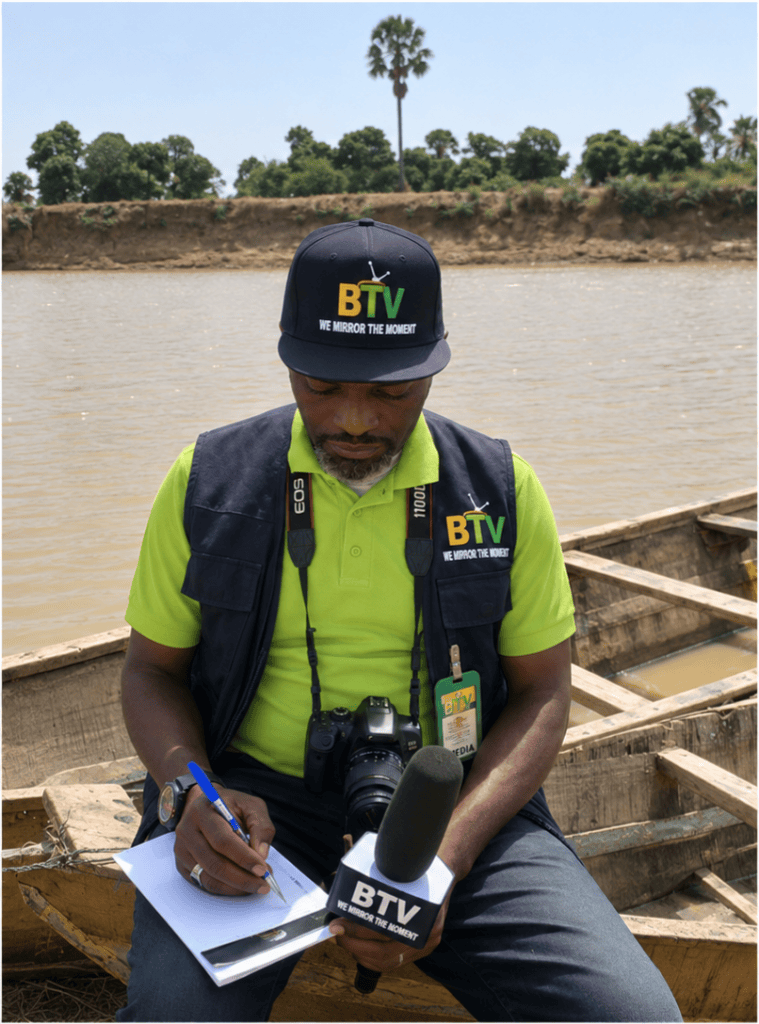
A Powerful Media-Driven Appeal to Governments, Scientists, NGOs, Civil Society, Journalists and Citizens to Turn Climate Awareness into Measurable Action
By AbdulHakeem Mutiu Adejumo-Ajeseku
CEO | Head of Communication, Research and Strategies
BTV Online TV, Radio and Publication: Climate and Peacebuilding Reporters (BTV-CPR), Abuja, Nigeria
Climate and Environmental Journalist, African Climate Reporters (ACR)
Member, African Institute of Waste Management and Environmental Studies (AIWMES).
BTvNEWS: Climate change is no longer a distant environmental concern confined to scientific conferences, policy documents and international summits. It is a present and growing threat to lives, livelihoods, food security, public health, peace and sustainable development. Across Nigeria and beyond, communities are increasingly confronted with extreme weather events, flooding, environmental degradation, rising temperatures, changing agricultural patterns and mounting pressure on already vulnerable natural resources.
Nigeria’s National Climate Change Policy recognises the need for a climate-resilient, low-carbon and sustainable development pathway, while the National Climate Change Action Plan provides a framework for coordinated action across critical sectors. Against this backdrop, BTV Online TV, Radio and Publication: Climate and Peacebuilding Reporters (BTV-CPR) is positioning responsible journalism as a powerful instrument for transforming climate information into public awareness, institutional accountability and practical action.
The role of BTV-CPR therefore goes beyond simply reporting that climate change is happening. It is about explaining why it matters, who is affected, what can be done and who must act. Through television, radio, digital journalism, investigative reporting, interviews, documentaries, public-interest features and solutions-driven storytelling, BTV-CPR seeks to bridge the gap between climate science, government policy and the everyday realities of communities.
The media has a critical responsibility to inform and educate the public, translate complex scientific information into accessible language and encourage communities to embrace appropriate interventions. As a climate and peacebuilding platform, BTV-CPR also recognises that environmental pressures can intersect with livelihoods, displacement, resource competition and community tensions, making accurate, responsible and conflict-sensitive reporting essential to building resilience, promoting peaceful coexistence and sustaining development.
“Climate journalism must move beyond the traditional language of disaster and despair to become journalism of solutions, accountability and measurable impact,” said Comrade AbdulHakeem Mutiu Adejumo-Ajeseku.
“At BTV-CPR, our mission is to inform minds, amplify credible voices, expose environmental challenges, promote workable solutions and inspire citizens and institutions to act. We believe the journalist should not only tell society what is wrong, but also investigate what is being done, interrogate what is not being done and spotlight solutions that can be replicated,” he added.
BTV-CPR consequently calls on governments at the federal, state and local levels to treat climate action as a fundamental development priority rather than a ceremonial policy commitment. Governments must strengthen climate-resilient infrastructure, improve flood and disaster preparedness, protect forests and wetlands, promote climate-smart agriculture, expand renewable-energy solutions, improve waste management and ensure that climate funds and environmental interventions are transparently and effectively utilised.
Climate policies must move beyond documents and declarations to measurable outcomes, with clearly defined targets, transparent public reporting, effective monitoring and independent accountability. Nigeria’s climate governance framework already provides important foundations for adaptation, mitigation, measurement, reporting and verification; what is now required is sustained implementation, stronger coordination and demonstrable political commitment.
The call also extends to NGOs, civil society organisations, development partners, scientists, universities, professional bodies, traditional institutions, businesses and other non-state actors to deepen collaboration with the media and affected communities.
Scientists must make credible research understandable and accessible to the public; NGOs must strengthen grassroots mobilisation and environmental education; businesses must embrace environmentally responsible practices and sustainable innovation; civil society organisations must monitor government commitments and demand accountability; while development partners must support locally relevant and community-driven interventions.
The media, on its part, must remain a credible bridge between scientific knowledge, policy decisions and public participation. Greater investment in climate journalism training, investigative reporting and solutions-oriented storytelling will strengthen the capacity of the media to contribute meaningfully to climate governance and resilience.
“We cannot afford climate information to remain trapped in laboratories, policy documents or conference halls,” the BTV-CPR chief further stated.
“Scientific knowledge must reach the farmer, the fisherman, the trader, the student, the community leader, the policymaker and the ordinary citizen. Equally, the experiences of vulnerable communities must travel back to policymakers and scientists. This two-way communication is where journalism becomes a catalyst for climate resilience.”
“The climate crisis demands more than headlines; it demands courage, collaboration and action,” the climate journalist declared.
“Let us move from awareness to accountability, from accountability to implementation, and from implementation to a safer, greener, more peaceful and sustainable future. The time to act is not tomorrow—the time is now,” the media guru further emphasized.
BTV-CPR therefore advocates journalism anchored in accuracy, evidence, investigative depth, solutions journalism, environmental accountability and peace-sensitive reporting. Climate stories should connect extreme weather and environmental degradation to agriculture, health, water, energy, education, migration, livelihoods, security and economic development. Journalists must verify scientific claims, scrutinise official figures, follow public expenditure, investigate abandoned environmental projects and expose practices that undermine ecological sustainability.
At the same time, responsible journalism must avoid sensationalism and inflammatory narratives capable of aggravating social tensions. Climate reporting should give affected communities a meaningful voice, highlight credible solutions and hold institutions accountable while promoting dialogue, resilience and peaceful approaches to environmental challenges.
Ultimately, climate action is everybody’s responsibility. Individuals must reduce waste, protect trees and natural habitats, conserve water and energy, support sustainable practices and become responsible environmental ambassadors in their homes, workplaces and communities.
Governments must govern and deliver; scientists must provide credible evidence; NGOs and civil society must mobilise and hold institutions accountable; businesses must innovate responsibly; journalists must inform, investigate and amplify solutions; communities must participate; and every citizen must play a role. BTV-CPR remains committed to using the power of responsible journalism to keep climate action, environmental protection, peacebuilding and sustainable development firmly within the public consciousness.
BTV-CPR — INFORMING MINDS. AMPLIFYING VOICES. DRIVING ACCOUNTABILITY. INSPIRING ACTION.
Email: btvnewsnigeria@gmail.com; goldenmirrorcommunicationsltd@gmail.com; abdulhakeem.ajeseku002@gmail.com
BTV — WE MIRROR THE MOMENT.


Leave a Reply