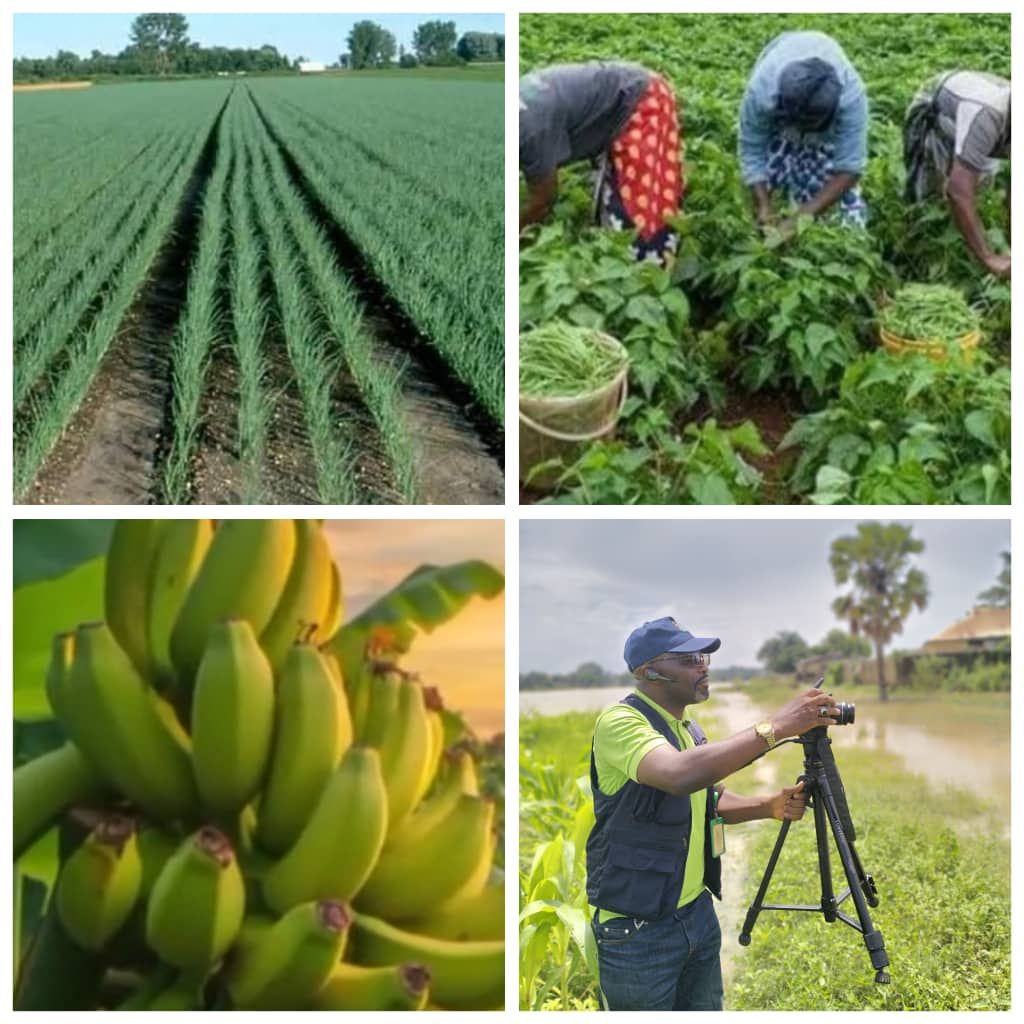
By AbdulHakeem Mutiu Adejumo-Ajeseku, Abuja-Nigeria
Embracing Sustainable Farming Practices to Protect Our Land, Water, and Biodiversity…
BTvNEWS: As a science, environmental, and investigative journalist with BTV Climate Reporters and African Climate Reporters, in conjunction with the African Institute of Waste Management and Environmental Studies (AIWMES), I am compelled to sound the alarm on the looming threat of genetically modified organisms (GMOs) and toxic chemicals in Nigeria’s agricultural sector.
The increasing reliance on inorganic and highly chemicalized fertilizers, as well as weedkillers, poses a significant risk to the country’s fertile lands, rivers, aquatic mammals, and biodiversity.
The Western world’s aggressive promotion of these harmful practices has far-reaching consequences for Nigeria’s environmental, economic, and social well-being.
The use of GMOs and toxic chemicals in agriculture has been linked to soil degradation, water pollution, loss of biodiversity, and adverse human health effects.
These practices also perpetuate a cycle of dependence on external inputs, undermining the resilience and sustainability of local farming systems.
Moreover, the patenting of GMO seeds by multinational corporations threatens the sovereignty of Nigerian farmers, forcing them to rely on expensive and proprietary inputs.
This has severe implications for food security, as the country becomes increasingly vulnerable to fluctuations in global markets and corporate interests.
However, there is hope. By embracing sustainable farming practices, Nigerian farmers can resist the threat of GMOs and toxic chemicals, protecting their land, water, and biodiversity.
Agroecology, permaculture, and organic farming offer viable alternatives, promoting soil health, biodiversity, and efficient water use.
These approaches also empower farmers to take control of their own production systems, relying on local knowledge, skills, and resources.
By supporting sustainable agriculture, Nigeria can ensure a healthier, more resilient food system, capable of withstanding the challenges of climate change, economic uncertainty, and environmental degradation.
It is imperative that individuals, farmers, communities, NGOs, civil societies, and governments take immediate action to promote sustainable agriculture in Nigeria.
This requires a multifaceted approach, encompassing policy reforms, capacity building, and community engagement.
Policy makers must create an enabling environment for sustainable agriculture, providing incentives for farmers to adopt eco-friendly practices.
This can include subsidies for organic inputs, tax breaks for sustainable farming enterprises, and investments in agricultural research and development.
Farmers must be empowered with the knowledge, skills, and resources needed to adopt sustainable farming practices.
This can be achieved through training programs, extension services, and community-based initiatives.
Communities must be mobilized to support sustainable agriculture, promoting local food systems and advocating for policy reforms.
NGOs, civil societies, and community-based organizations can play a critical role in this process, providing technical assistance, advocacy, and community engagement.
In conclusion, the future of Nigeria’s agricultural sector hangs in the balance. Will we succumb to the pressure of the Western world, embracing the destructive practices of GMOs and toxic chemicals? Or will we chart a new course, embracing sustainable farming practices that prioritize the health of our land, water, and biodiversity?
The choice is ours. Let us join forces to create a sustainable food system in Nigeria, one that prioritizes the well-being of our people, our planet, and our prosperity.
About the Author:
Comrade AbdulHakeem Mutiu Adejumo (Ajẹṣẹku) is a distinguished science, environmental, and investigative journalist with BTV Climate Reporters and African Climate Reporters. He is also a member of the African Institute of Waste Management and Environmental Studies (AIWMES).
With a robust background in reporting on science, environmental, and safety issues, he has established himself as a leading voice in Nigeria’s journalism landscape.
His extensive reporting has garnered numerous commendations and awards, solidifying his reputation as a dedicated and impactful journalist.
About BTV Climate Reporters:
BTV Climate Reporters is a premier platform for science, environmental, and investigative journalism in Nigeria, dedicated to advancing climate action, sustainability, and environmental stewardship.
Through in-depth reporting, analysis, and storytelling, the platform provides a critical perspective on the most pressing science, environmental, and safety issues facing Nigeria and the world.
With a focus on promoting informed decision-making, accountability, and transparency, BTV Climate Reporters has become a trusted source of information and a catalyst for positive change.
Mobile: +2348057278252 | +2348082000298 | +2348186974277 | +2348065980566
 BTvNEWS
Leave a comment